
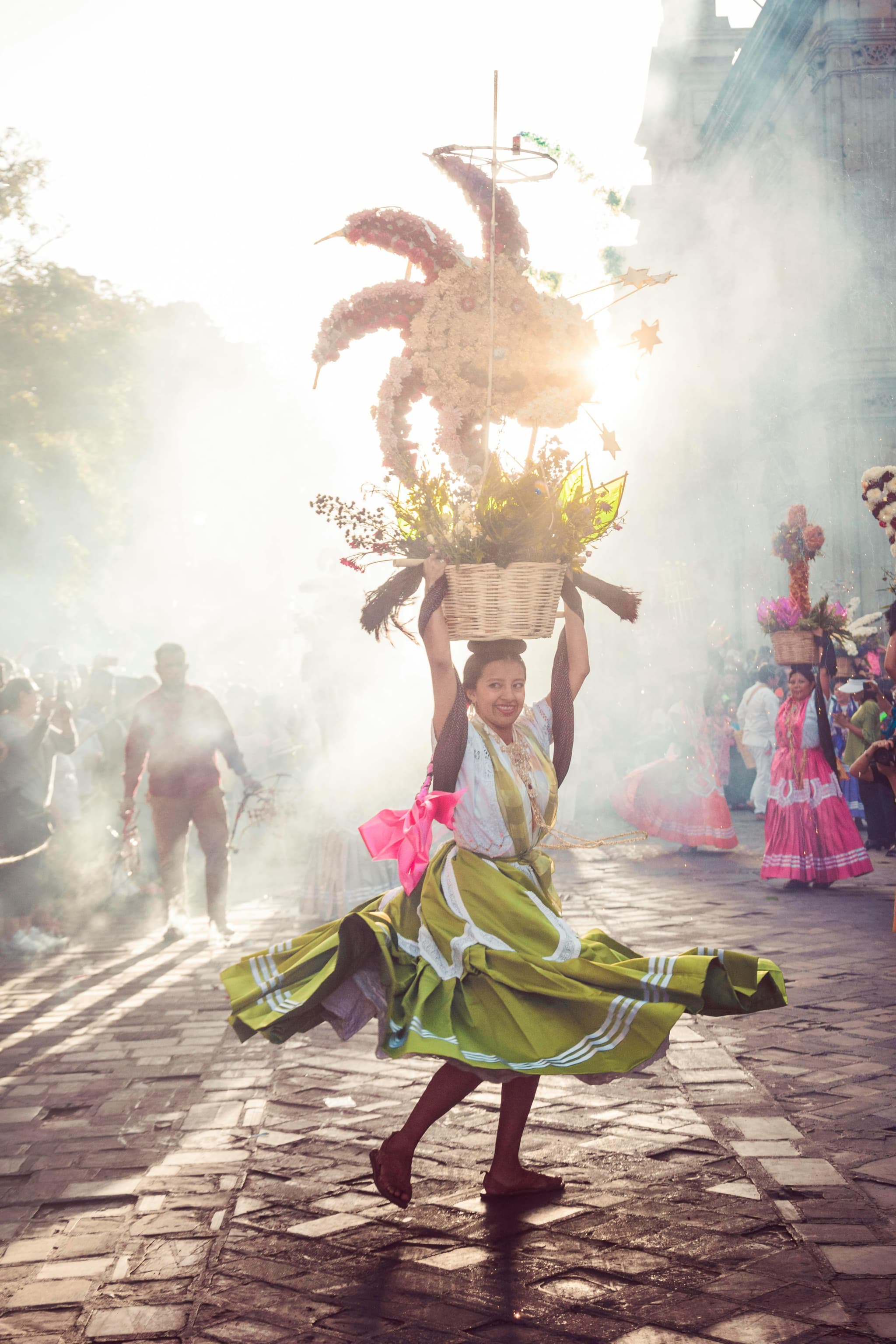
Oaxaca is full of hands at work. Hands pressing masa. Hands folding cloth. Hands shaping black clay. Hands passing coins across a market counter with the familiarity of people who have done the same exchange for decades.
The city is beautiful, but it is not only beautiful. It is skilled. That is what you feel after a few hours in the markets and side streets: the confidence of people who know how to make useful things slowly.
Beyond the postcard
The food is the easiest doorway. A tlayuda lands on the table crisp at the edges, smoky from the comal, and practical enough to feed two people who thought they were only stopping for a snack. Mole arrives darker and deeper than expected, carrying the memory of toasted chiles, seeds, spice, and patience.
But the same patience is everywhere. In the dye of a woven rug. In the shape of a clay cup. In the way a market cook fans coals without looking hurried. Oaxaca makes craft feel ordinary, which may be the highest compliment.
The city does not separate culture from daily life. It lets you see how closely they have always sat together.
What to notice
- The sound of tortillas being shaped before breakfast.
- The calm precision of market cooks working through smoke.
- The pride in regional ingredients without performance.
- The way families linger in plazas after the heat loosens.
Come for mole and mezcal, of course. But stay alert to the people behind them. Oaxaca is not just a destination to taste. It is a destination to watch carefully, because almost everything worth remembering is being made by hand.